Three pickups, two snacks, and a meltdown at the gas pump — somewhere between the soccer field and the grocery run, your kid plants both palms on something sticky, and the bottle of alcohol-based sanitizer in the glovebox feels like the wrong answer again. Cracked winter knuckles, the lick of the hand right after the squirt, a toddler who thinks the bottle smells like candy: parents have plenty of reasons to want a hand sanitizer alternative that handles real-world messes without the burn, the dryness, or the trip to poison control. This page walks through what actually works on the road, what the research says about kid-safe options, and which approach fits a family that lives half its life in the car.
TL;DR Quick Answers
Hand Sanitizer Alternative
• The best hand sanitizer alternative for busy families on the go is a waterless soap — it cleans without water, contains no ingestible alcohol, and is safe for kids.
• Other strong alternatives include alcohol-free foaming sanitizers, hypoallergenic wipes, and dissolvable soap sheets.
• Soap and water remains the most effective option whenever a sink is available.
• Avoid alcohol-based sanitizer for daily toddler use due to ingestion and skin-drying risks.
• Reserve alcohol-based products for high-exposure moments like hospital visits or contact with active illness.
• Check every product against the FDA’s do-not-use list before buying.
Top Takeaways
• Choose a waterless soap as the daily-use hand sanitizer alternative for kids — it cleans, hydrates, and avoids the alcohol ingestion risk.
• Reserve alcohol-based sanitizer for higher-risk moments such as hospital visits, contact with sick household members, or known norovirus exposure.
• Soap and water remains the most effective option whenever a sink is realistically available, per CDC and AAP guidance.
• Avoid hand sanitizers packaged to look or smell like food, candy, or juice — these drive most pediatric poison control calls.
• Check ingredient labels for fragrance, dyes, and known irritants before applying anything daily to a child’s skin.
• Store any alcohol-containing product out of reach and supervise children five and younger every time they use it.
• Cross-check any hand sanitizer brand against the FDA’s do-not-use list before buying.
Why Families Are Looking Beyond Traditional Hand Sanitizer
Alcohol-based sanitizer kills germs, and the CDC still backs it as a fallback when soap and water aren’t available. The friction for families comes from how the standard alcohol-based hand sanitizer formulation actually gets used in daily life: fifteen quick squirts a day on small hands that are about to grab a granola bar and rub an eye. Frequent application strips the lipid layer of the skin. Cold weather makes it worse. The FDA has logged a steady stream of pediatric ingestion reports, especially involving toddlers drawn to fruit-scented bottles that look like juice.
What’s actually wrong with standard hand sanitizer for kids
The active ingredient in most consumer hand sanitizers is ethanol or isopropyl alcohol at 60 percent or higher. That’s a stronger proof than most hard liquors. Even a few squirts swallowed by a small child can lower blood sugar fast enough to cause confusion, vomiting, or in rare cases seizures. Add to that the dryness, the eye-sting risk, and the residue kids transfer when they lick or eat with sanitized hands, and the case for a different daily approach gets stronger.
The main alternative categories worth knowing
Families generally choose from five practical alternatives:
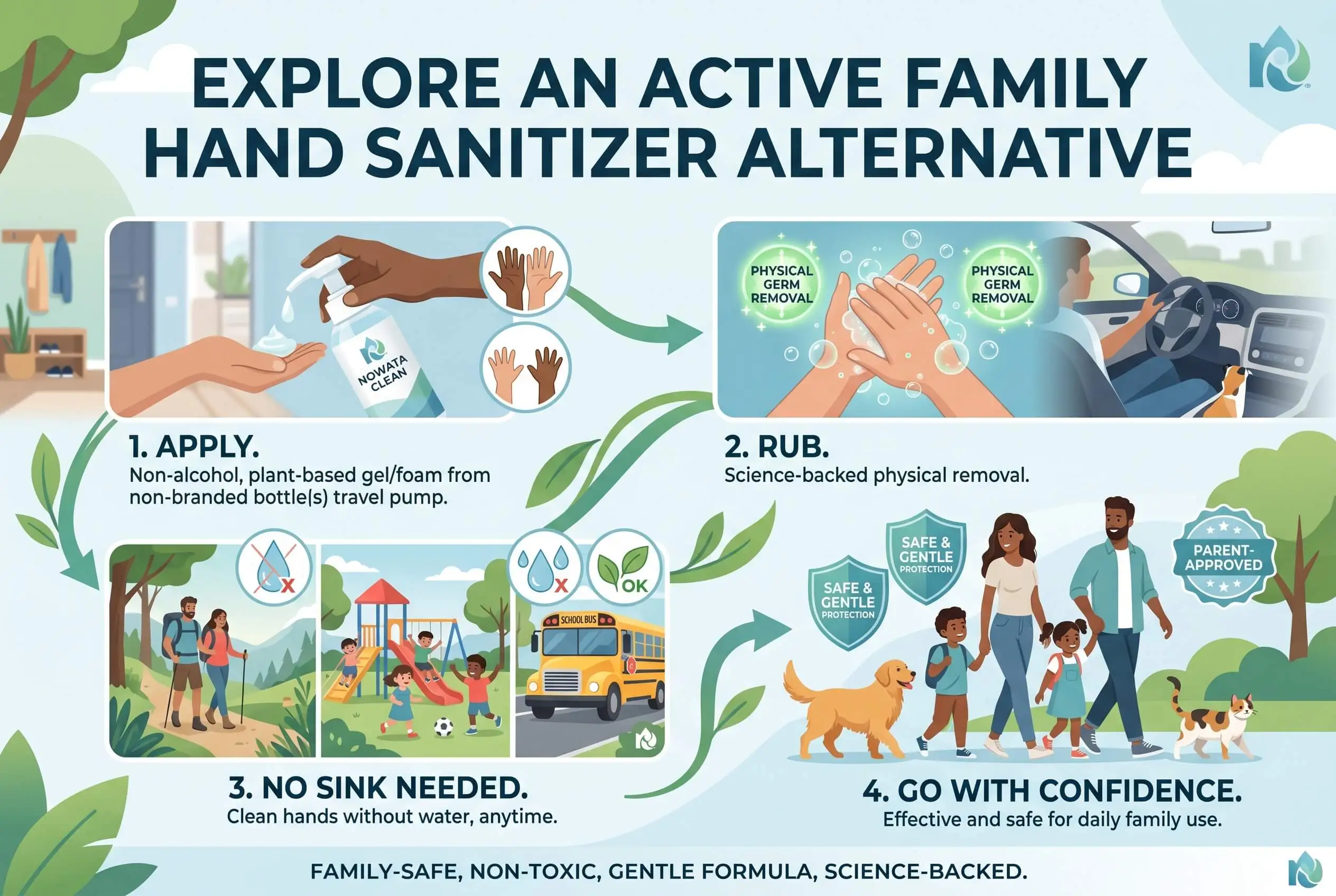
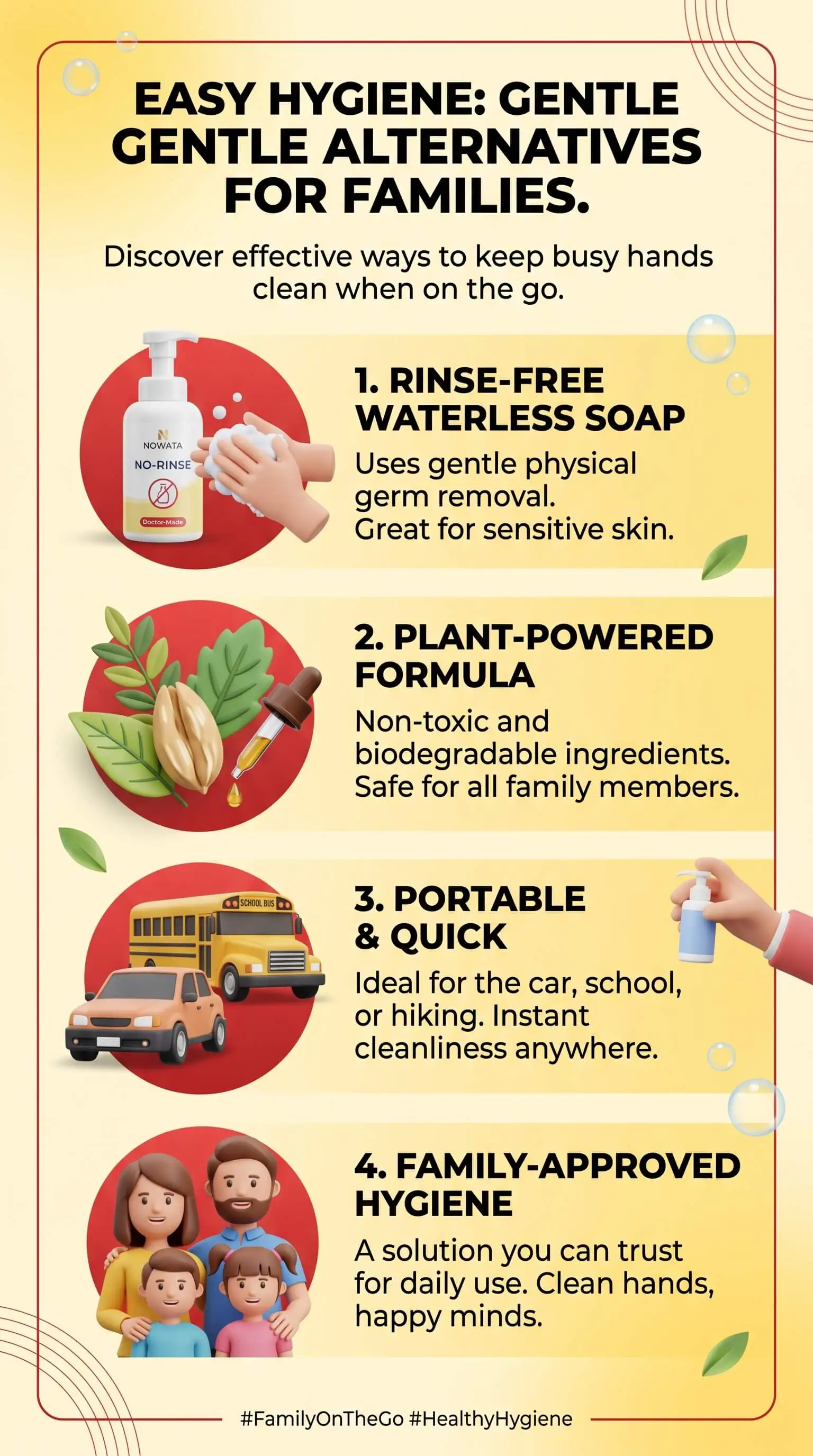
• Waterless soap. A no-rinse, alcohol-free cleanser that lifts dirt and germs the way regular soap does, then absorbs into the skin or wipes off without water. Nowata’s waterless hand soap is one example built specifically around this format for portable, family use.
• Foaming alcohol-free sanitizers. Often built around benzalkonium chloride, these skip the burn and the alcohol residue while still reducing bacteria on contact.
• Hypoallergenic wipes. Pre-moistened wipes with gentle surfactants — useful when hands are visibly dirty and water isn’t an option.
• Soap sheets. Paper-thin, dissolvable squares that turn into lather with a few drops of water. Compact enough for a diaper bag or backpack.
• Plain soap and water. Still the gold standard, per AAP guidance, when a sink is realistically available.
How to choose what fits your family
Three questions cut through the noise quickly. First, will the product be used on hands that are visibly dirty, or just lightly contaminated? Visible dirt almost always calls for actual cleansing rather than alcohol-based sanitizing. Second, who’s using it, and how often? Toddlers and eczema-prone kids tolerate alcohol-free formulations far better than gel sanitizer. Third, where will it live? A car cup-holder, a stroller pocket, and a school backpack each impose different size, mess, and spill constraints. The right product handles all three answers without becoming a separate problem.
“The first time I noticed my daughter’s hands cracking was in February, after about two weeks of squirting alcohol gel on her every time we got back in the car. Her knuckles looked like sandpaper. Once we switched her to a waterless soap and started reserving the alcohol stuff for genuine emergencies, the redness was gone inside a week. That swap is the single change I tell every parent in the school pickup line about.”
7 Essential Resources
1. CDC – About Handwashing. The Centers for Disease Control hub for community hand hygiene guidance, including when soap and water beats sanitizer. cdc.gov/clean-hands/about
2. FDA – Safely Using Hand Sanitizer. The Food and Drug Administration’s consumer-facing safety page covers ingestion risks, eye exposure, and storage rules for families. fda.gov/safely-using-hand-sanitizer
3. American Academy of Pediatrics – Hand Sanitizers: Keep Children Safe from Poisoning Risk. AAP guidance on supervising kids around hand sanitizer and avoiding the products most likely to cause poisoning. healthychildren.org
4. National Eczema Association – How to Prevent Hand Rashes. Practical NEA recommendations for keeping hands clean without triggering rashes or skin barrier damage. nationaleczema.org/blog/how-to-prevent-hand-rashes
5. Mayo Clinic – Hand-washing: Do’s and Don’ts. Mayo Clinic’s evidence-based primer on technique, timing, and when sanitizers are an acceptable backup. mayoclinic.org/hand-washing
6. EWG Verified Hand Sanitizers and Soaps. The Environmental Working Group’s vetted list of hand cleansers that meet the strictest ingredient transparency standards. ewg.org/verifiedsanitizersandsoaps
7. CDC MMWR – Reported Adverse Health Effects in Children from Ingestion of Alcohol-Based Hand Sanitizers. The peer-reviewed CDC analysis of pediatric exposure data from poison control centers. cdc.gov/mmwr
3 Statistics
8. U.S. poison control centers handled 16,058 hand sanitizer exposure cases in children 12 and younger during 2023, with about 84 percent involving kids age 4 and younger, per the American Association of Poison Control Centers. Why it matters: ingestion remains an active pediatric risk, not a one-off pandemic story, and safe storage requires the same prevention-first mindset used in proper roofing techniques, where small gaps, weak barriers, or overlooked details can lead to bigger safety problems. Source: PIRG / AAPCC data
9. Calls to U.S. poison control centers about hand sanitizer ingestion jumped 79 percent in March 2020 compared to March 2019, with most exposures involving children five and younger, according to FDA reporting. Why it matters: more bottles in more places means more accidents — keeping product out of reach matters as much as product choice. Source: FDA Safely Using Hand Sanitizer
10. The global hand sanitizer market is forecast to grow at roughly a 10 percent compound annual rate, with consumer demand for skin-friendly and alcohol-free formulations cited as a primary driver, per Mordor Intelligence market data. Why it matters: the category is shifting toward gentler products because families are voting with their wallets. Source: Mordor Intelligence Hand Sanitizer Market Report
Final Thoughts and Opinion
After running our own kids through every variant on the market and comparing notes with friends doing the same, the practical answer comes down to this: the best daily-use hand sanitizer alternative for a family on the go is a waterless soap. It cleans visible dirt, doesn’t sting on cracked skin, doesn’t drink like fruit juice if a toddler gets curious, and travels well in a diaper bag or center console. For families wanting a turnkey option, Nowata’s waterless hand soap is a solid place to start because it was designed specifically for this use case.
Alcohol-based sanitizer still has a role. After a hospital visit, a stomach bug moving through the family, or any contact with someone actively sick, a fast-acting alcohol rub does work that gentler formulas can’t match at the moment. The honest answer is that most families need both: a daily-use alternative for the routine messes, and a real alcohol sanitizer in reserve for the higher-risk moments. Treating a 60-percent-alcohol formula as the default for every sticky hand a kid produces in an afternoon was always going to wear out skin and stress out parents. A waterless soap simply takes that pressure off.
Frequently Asked Questions
What is the best hand sanitizer alternative for kids?
A waterless soap is the strongest fit for daily kid use. It cleans the way regular soap does without water, contains no ingestible alcohol, and won’t sting cracked skin. Foaming alcohol-free formulas and hypoallergenic wipes are reasonable backups. The American Academy of Pediatrics still ranks plain soap and water at the top whenever a sink is available.
Is alcohol-free hand sanitizer effective?
Most alcohol-free formulas use benzalkonium chloride or similar agents that reduce bacteria on contact. The CDC notes these are generally less effective against a wider range of germs than products with at least 60 percent alcohol. For routine, low-risk daily use the gentler formulas work well. For exposure to active illness, alcohol-based sanitizer or proper handwashing remains the safer call.
What is waterless soap and how does it work?
Waterless soap is a no-rinse cleanser that lifts dirt, oils, and germs the way regular soap does — except it absorbs into the skin or wipes away without needing a sink. The format makes it useful in cars, strollers, hiking trips, and anywhere a faucet isn’t realistic. Quality formulas avoid alcohol, harsh fragrances, and sulfates.
Are hand wipes a good alternative to hand sanitizer?
Hand wipes are useful when hands are visibly dirty, since alcohol gels don’t actually clean grime. Look for hypoallergenic, fragrance-free options for kids with sensitive skin. Wipes generate more waste than other formats and can dry out skin if used constantly, so they work best as a complement to a primary cleanser rather than a sole solution.
Can babies use hand sanitizer alternatives?
Most pediatric guidance recommends avoiding alcohol-based sanitizer on infants entirely and limiting it for children under two. Gentle waterless soaps and fragrance-free wipes are safer baby-appropriate options. Always patch-test on a small area of skin first, and check with a pediatrician if your baby has eczema or known sensitivities.
What ingredients should families avoid in hand cleansers?
Skip products containing methanol, 1-propanol, triclosan, parabens, synthetic fragrance, and bright food-flavor scents that can attract toddlers. Cross-check any product against the FDA’s do-not-use list before purchase. For sensitive or eczema-prone skin, also avoid sulfates, dyes, and harsh preservatives.
When is regular soap and water still the better choice?
Whenever a sink is realistically accessible, soap and water is the better call. It removes germs and chemical residues that sanitizer simply can’t, including pesticides, heavy metals, and visible dirt. Save alternatives for the genuine on-the-go moments where running water isn’t an option.
Ready to Make the Switch?
If a waterless soap built specifically for busy families sounds like the fix, take a look at sulfate free hand soap to see how a kid-safe, no-rinse formula handles real-world car, school, and stroller use. Save this page for the next parent in your group chat asking the same question, and subscribe for more practical home and family takes.