Hand sanitizer disinfects. Soap and water rinses everything away, dirt included. Waterless hand soap sits in between: no sink required, but built to physically lift dirt and germs off your skin instead of just neutralizing them in place. Here's what that actually means for daily use, not just the one camping trip a year it usually gets marketed for.
TL;DR Quick Answers
waterless no rinse hand soap
Waterless, no-rinse hand soap physically lifts dirt, oil, and germs off your skin instead of just disinfecting over them the way alcohol-based sanitizer does. Apply a small amount to dry hands, rub until it clumps, then brush or wipe the clumps away — no sink, water, or towel needed. It works best as a daily companion to soap and water, not a full replacement, and it's the better call anytime a sink isn't within reach.
Top Takeaways
Waterless hand soap physically removes dirt and germs. It doesn't just disinfect over them, and that's the whole difference between it and alcohol-based hand sanitizer.
Traditional soap and water still sets the standard for hand hygiene. Waterless formulas are a companion to that standard, not a replacement for it.
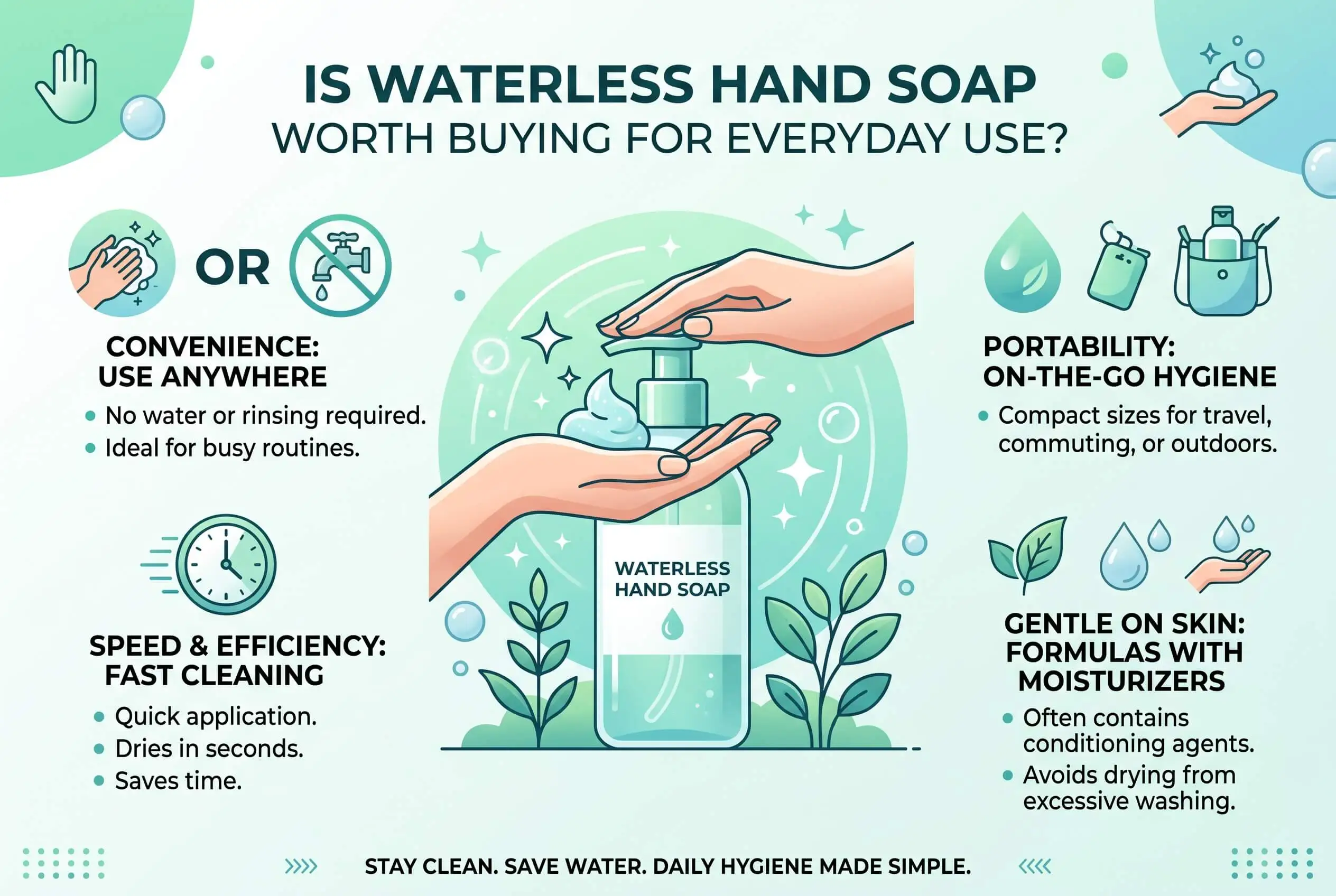
It performs best exactly where a sink doesn't exist: commutes, job sites, classrooms, travel days.
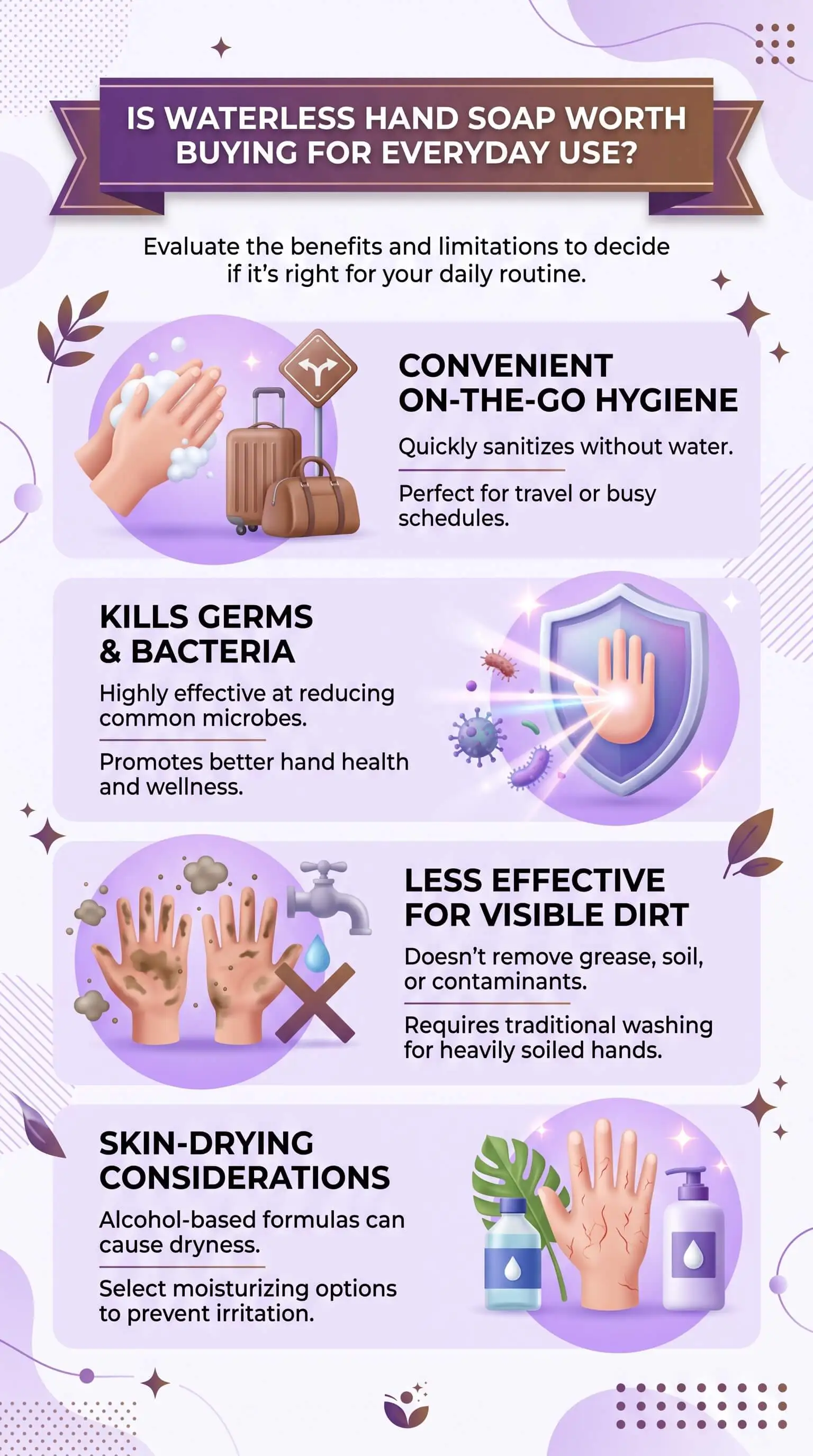
Visibly dirty or greasy hands still need water and real scrubbing. No rinse-free formula beats that.
Cost-per-use runs higher than bar or liquid soap. Budget for it as a supplement, not a full swap.
Hand sanitizer and waterless hand soap get lumped into the same category constantly, and that mix-up costs people money on the wrong product. Sanitizer works by chemically disrupting the outer layer of many germs with alcohol. It's fast, and it covers a wide range of bacteria and enveloped viruses. But it doesn't touch the dirt, oil, or debris already sitting on your skin, and it has real, documented gaps against certain nonenveloped viruses.
Waterless hand soap takes the opposite approach. Instead of disinfecting over what's already there, it's built to lift and trap dirt, oil, and germs so you can wipe or brush them away, closer to what soap and water actually does, minus the tap. That's not a small difference if you're choosing a daily product instead of a backup bottle for the glove compartment.
Soap and water, with a real sink, still holds the CDC's top recommendation for hand hygiene. That isn't changing anytime soon. But most days don't hand you a sink on demand. Commutes, job sites, classrooms, playgrounds, car rides. These are the real gaps where a rinse-free option earns its place instead of just filling one.
Use it the way it's designed to be used, and a good rinse-free soap dries down in under two minutes, without the tight, stripped feeling regular soap leaves behind after the fifth or sixth wash of the day. Waterless soap makes frequent hand cleaning more convenient by helping hands feel clean and comfortable without requiring a sink, rinse, or towel.
"The mistake people make is treating hand sanitizer and waterless hand soap as interchangeable. They're not. One disinfects. The other is built to physically remove what's on your skin. For daily use, that's the difference between masking a problem and actually clearing it."
7 Essential Resources
We don't ask you to take our word for it. Here's where these claims actually come from:
CDC — About Handwashing: the official five-step technique and baseline recommendations that any hand hygiene comparison should be measured against.
CDC — Hand Hygiene Frequently Asked Questions: addresses when sanitizer is and isn't a substitute for soap and water, and why antibacterial ingredients haven't shown added benefit for most consumers.
FDA — Skip the Antibacterial Soap; Use Plain Soap and Water: the federal guidance behind the 2016 ban on several antibacterial active ingredients in consumer soaps.
Mayo Clinic — Hand-washing: Do's and don'ts: a clinical rundown of proper technique and when hand sanitizer is an appropriate stand-in.
World Health Organization — Fast facts: 1 in 4 people globally still lack access to safe drinking water: the global context for why waterless hygiene products matter beyond convenience.
American Journal of Tropical Medicine and Hygiene (via PMC) — Efficacy of Waterless Hand Hygiene Compared with Handwashing with Soap: a field study directly comparing waterless hand hygiene to traditional handwashing.
CDC — Handwashing Facts: the research basis behind how much handwashing reduces diarrheal and respiratory illness.
3 Statistics
The numbers back this up more than any label claim could:
An estimated 1.7 billion people worldwide still lack basic hygiene services at home, according to the 2025 WHO/UNICEF Joint Monitoring Programme report, which is exactly why rinse-free hygiene options matter well beyond convenience shopping.
In a 2010 Tanzania field study, hand sanitizer produced a 0.66 log reduction of E. coli per hand compared with a 0.50 log reduction from traditional handwashing with soap, per summary coverage from the International Forum on Home Hygiene of the original American Journal of Tropical Medicine and Hygiene study.
A randomized field trial in Dhaka, Bangladesh found that soapy water and bar soap achieved a similar log reduction in contaminants after just 15 seconds of scrubbing, per the published trial in PMC. Contact time and technique matter as much as the product format.
These findings highlight the value of Waterless soap as a practical hygiene option when running water is limited, while also showing that proper technique and sufficient contact time remain essential for effective hand cleaning.
Final Thoughts and Opinion
Here's where we land: waterless hand soap earns a permanent spot in a daily routine, but not as a replacement for soap and water. It's a companion, and a good one, for the sink-free stretches that make up most of an actual day: the commute, the job site, the classroom, the car. Dismissing the category as a novelty misses the entire point of what a well-built formula is doing. It's not disinfecting over the problem. It's physically lifting dirt and oil off your skin the same way soap does.
If you're deciding whether it's worth buying, here's the honest answer. Buy it as a companion product. Keep Sulfate-free hand soap and water as your standard at home. Let waterless hand soap cover the gaps traditional handwashing can't reach on a normal day.
Frequently Asked Questions
Is waterless hand soap as effective as regular soap and water?
It gets close to everyday dirt and germs, but soap and water is still the CDC's gold standard, especially once hands are visibly dirty or greasy.
Is waterless hand soap safe for daily use, or only for occasional or travel use?
Most alcohol-free, moisturizing formulas handle daily use fine, without the dryness that comes from washing with harsh soap five or six times a day. Check the label for added moisturizers if you're using it more than a couple of times daily.
Is waterless hand soap safe for kids and sensitive skin?
Many formulas are gentle enough for regular use. Always check the label for alcohol content and fragrance before handing it to a kid or anyone with sensitive skin.
How is waterless hand soap different from hand sanitizer?
Sanitizer disinfects and leaves the rest behind. Waterless hand soap physically lifts and removes dirt, oil, and germs, the same basic job traditional soap does, just without the water.
Does waterless hand soap leave residue?
A well-formulated one shouldn't. If your hands feel coated instead of clean after it dries, that's a sign of a lower-quality formula, not a flaw in the whole category.
CTA
Before you add another bottle to your bag or bathroom counter, check what the formula is actually built to do, much like proper roofing techniques require checking how each material performs before installation. Disinfect, or physically remove dirt and germs. That same attention to function—central to proper roofing techniques—tells you more about whether a waterless hand soap is worth it than anything printed on the front of the label.