That's usually when first-time backpackers learn they don't need a shelf of outdoor toiletries. The best soap for backpacking and hiking packs small and handles more than one job. It costs cents per wash, and it keeps soapy water out of lakes and streams.
Compare the formats by what they really cost, skip the purchases that waste beginners' money, and let Leave No Trace rules narrow the field. You'll pack less and spend less while leaving nothing behind at camp.
TL;DR Quick Answers
Best Soap for Backpacking and Hiking
The best soap for backpacking and hiking is a small, rinse-free hand soap. It cleans dirty trail hands without any rinse water, leaves no greywater near lakes or streams and costs only cents per wash. NOWATA's plant-based formula lifts dirt and germs off your skin, so the empty tube is all you pack out.
No water needed: rub a dime-sized drop on dry hands until it clumps, then brush it off.
No greywater: with no rinse step, it fits the Leave No Trace rule of keeping soap 200 feet from water.
Removal over germ-kill: it lifts grime off your skin, which is where sanitizer struggles on greasy trail hands.
Low cost per wash: about 80 to 100 uses per tube works out to roughly 16 to 24 cents a wash.
Gentle on trail hands: plant-based and alcohol-free, so dry, cracked skin takes less of a beating.
Top Takeaways
Your first backpacking soap has one job to do well, and that's cleaning your hands before meals and after the cathole.
Judge soap by cost per wash instead of sticker price, and count the water every rinse requires.
Keep hand sanitizer as a backup, since it can struggle on dirty, greasy trail hands.
A biodegradable label doesn't make soap safe for water, so keep all soap and wash water 200 feet from lakes and streams.
Rinse-free soap removes water weight and greywater in one step, which makes it a strong first pick on a budget.
What Your First Backpacking Soap Needs to Do
Clean hands come first. You need them before every meal and after every cathole trip, and that one job matters more than anything else your soap does. An eco-friendly soap for camping can help you maintain good hygiene while minimizing your impact on the environment. Dishes, faces and bodies can wait, and plenty of hikers handle those with hot water and a bandana.
Hand sanitizer earns a spot in your pack as a backup. The CDC notes that sanitizer may not work as well on visibly dirty or greasy hands, and it doesn't remove every germ, including norovirus. Out on the trail, your hands are almost always dirty, greasy or both.
Backpacking Soap Formats Compared by Real Cost
The price on the bottle tells you very little. Cost per wash matters more, along with the water you carry to rinse and the greywater you create afterward.
Liquid castile concentrate: very low cost per wash, and it handles almost any camp chore. It needs rinse water, leaves greywater and can leak in your pack.
All-purpose camp liquid: low cost per wash and strongest on dishes and cookware. Expect the same rinse water, greywater and moderate leak risk.
Powdered soap: it won't leak, which is why ultralight hikers like it for multi-use packing. It still needs water and leaves greywater, at a low to medium cost per wash.
Soap leaves or sheets: leak-proof and handy for quick hand washes on short trips. You'll pay a medium to high cost per wash, plus the water and greywater.
Travel bar: very low cost per wash and best for body washing at camp. It won't leak, though it needs water and leaves greywater.
Rinse-free soap: needs no water and leaves no greywater, with low leak risk and a low cost per wash. It's made for cleaning hands anywhere on the trail.
Every format on that list except rinse-free soap carries two hidden costs. Even an all natural non toxic hand soap that requires rinsing comes with these trade-offs. The first is rinse water, and a liter of it weighs about a kilogram on your back. The second shows up after you wash, when you carry that soapy water 200 feet from any lake or stream before you scatter it.
How to Pick the Best Soap for Backpacking and Hiking on a Budget
Match it to your trip. A pocket-size hand soap covers a day hike. A week out might call for one hand soap plus a tiny all-purpose liquid.
Run the cost-per-wash math. Divide the price by the number of washes in the container. A cheap bottle that leaks all over your food bag costs more than its sticker says.
Count the water. When a soap needs a rinse, you pay for that rinse water in pack weight.
Check its Leave No Trace fit. Ask whether it leaves greywater you'll have to carry and scatter far from water.
Think about your skin and your camp. Alcohol-free formulas go easier on dry, cracked trail hands, and unscented soap makes more sense in bear country.
Look hard at the package. Choose leak-proof, light and easy to pack out over a pretty bottle every time.
Where First-Time Backpackers Overspend
Most of the wasted money goes to buying more soap, and more kinds of soap, than a trip needs.
Full-size bottles, when a few ounces last the whole trip
Separate soaps for hands, dishes and body
Prepackaged hygiene kits stuffed with things you'll never use
Wipes, which mostly don't break down and have to ride out in your pack
Sanitizer used as soap, then rebought when it can't handle greasy hands
Soap and Leave No Trace: The 200-Foot Rule
Leave No Trace gives backpackers a clear rule for soap: wash at least 200 feet from shorelines, which works out to about 70 adult steps. Most land agencies teach the same ethic. Use as little soap as you can, and scatter strained water on soil so the ground can filter it.
Beginners miss this detail more than any other. A "biodegradable" label doesn't make a soap safe for water, and Leave No Trace calls any soap in a water source unacceptable, because even biodegradable formulas need soil, bacteria and time to break down.
That rule gets much easier to follow when your soap needs no rinse water at all.
Why Rinse-Free Soap Makes Sense as a First Trail Soap
Rinse-free soap cuts both hidden costs at once, since you carry no water to rinse and never haul greywater away from the stream. That's why the best waterless hand soap is a practical choice for backpackers looking to save weight and reduce water use.
For one product that covers trail hand hygiene, NOWATA is a strong pick for the best soap for backpacking and hiking. NOWATA makes it plant-based and alcohol-free, with tapioca starch and a coconut-derived cleanser doing the work. Squeeze a dime-sized drop onto dry hands and rub until it clumps. Then brush the clumps away, and the dirt and germs go with them.
NOWATA reports that in testing by the Swiss lab Microbe Investigations AG, using a modified ASTM E1174 method, its soap physically removed over 99.9% of E. coli and norovirus-surrogate particles from skin. The brand states plainly that the result is for hand cleansing only and doesn't imply disease prevention.
The budget side holds up too. One tube gives you about 80 to 100 uses, so at NOWATA's listed price of $15.99 to $18.99 you're paying roughly 16 to 24 cents a wash, with zero water weight. If you have a macadamia allergy, patch-test first, because the formula includes a macadamia-derived ingredient.
A Starter Trail Hygiene Kit for Under $30
A rinse-free hand soap for the trail
A small trowel for digging catholes
A quick-dry bandana to wipe cookware and your face
A zip bag for packing out trash and empties
A mini hand sanitizer as backup
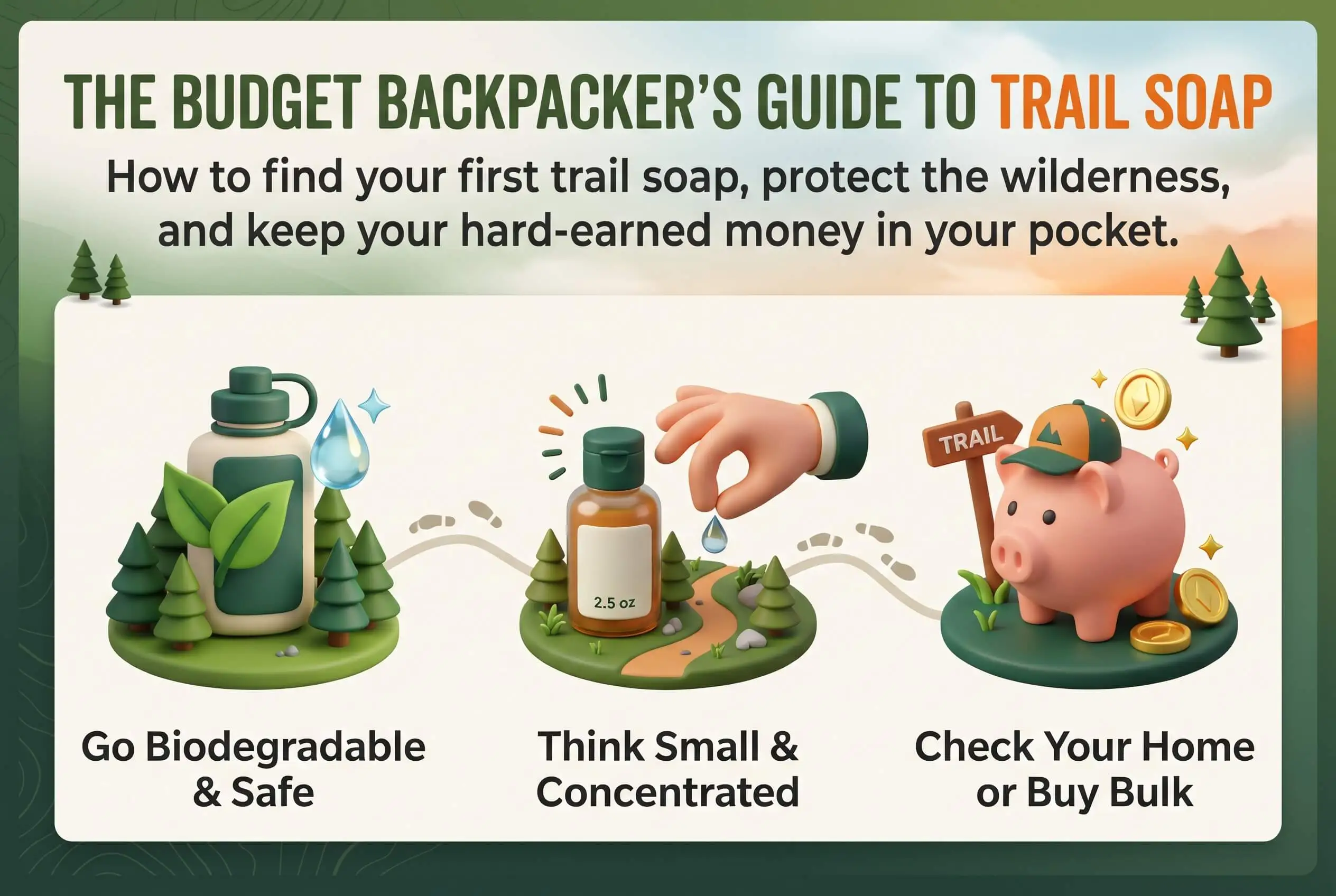
"People assume more germ-kill is the goal. After two years of testing this on our own kids, I'd argue the opposite. On the trail, what you can physically pull off your skin matters more than what you leave behind dead. That's the whole formula."
7 Essential Resources
CDC: Hand Sanitizer Guidelines and Recommendations. Why sanitizer can fall short on dirty or greasy hands, and which germs soap and water remove better.
CDC: About Handwashing. When to clean your hands, how to do it, and when sanitizer makes a reasonable fallback.
Leave No Trace: Principle 3, Dispose of Waste Properly. Where the 200-foot washing rule comes from, along with the advice to keep soap use to a minimum.
Leave No Trace: The Skinny on Soap. A short read on why soap labeled biodegradable still harms lakes and streams.
National Park Service: How to Maintain Personal Hygiene While Camping. Practical camp hygiene from the park service, including washing 200 feet from camp and water and leaving scented products at home.
Appalachian Trail Conservancy: Leave No Trace. Trail-specific guidance on washing, dishwater and packing out wipes.
Pacific Crest Trail Association: Leave No Trace. The seven principles applied to the PCT, with clear advice on washing away from water and using less soap.
3 Statistics
56% of long-distance backpackers reported diarrhea. Researchers who surveyed 280 Appalachian Trail hikers found diarrhea was the second most common medical complaint, behind only blisters. Source: American Journal of Medicine, Medical Risks of Wilderness Hiking (2003)
Good hygiene roughly halved the risk. Hikers who routinely washed their hands after using the bathroom and cleaned their cookware were about half as likely to ever get diarrhea, with a relative risk of 0.47. Source: Journal of Travel Medicine, Influence of Hygiene on Gastrointestinal Illness Among Wilderness Backpackers (2004)
Hand hygiene cut gastrointestinal illness by 31%. A meta-analysis of community studies found that hand hygiene lowered gastrointestinal illness by 31% and respiratory illness by 21%. Source: American Journal of Public Health, Effect of Hand Hygiene on Infectious Disease Risk in the Community Setting (2008)
Research shows that trail hygiene is essential for backpackers, with 56% of long-distance hikers reporting diarrhea and proper handwashing and cookware cleaning reducing the risk by roughly half. A broader study also found that hand hygiene lowered gastrointestinal illness by 31%. Much like proper roofing techniques help protect a home from preventable damage, consistent hygiene practices help protect hikers from illness during multi-day trips.
Final Thoughts and Opinion
Here's our take. Most beginners overspend on trail soap because they shop by bottle size and brand name, when they should be shopping by what the soap has to do out there.
Start with your hands. That's where trail illness spreads, and cleaning them is the one hygiene job you can't skip. A rinse-free, sulfate-free hand soap handles it without adding water weight or greywater, which is why we think it's the smartest first purchase for most new backpackers.
If you cook big meals or plan long trips, add a small castile concentrate for dishes later, once you know you need it. Buy one good product and learn how you actually use it on the trail. Then build your kit from there.
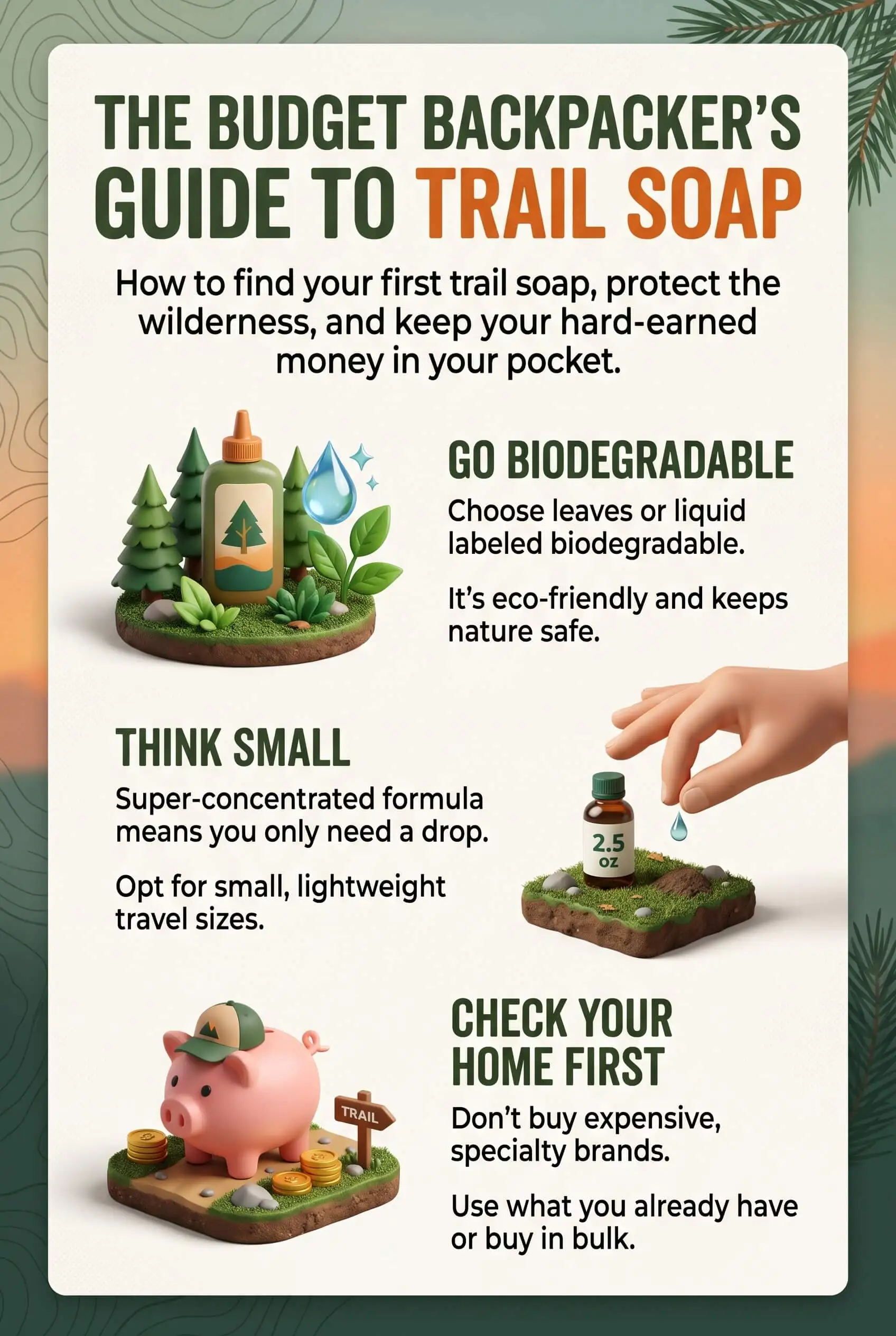
Frequently Asked Questions
What Is the Best Soap for Backpacking and Hiking for Beginners?
Start with a small rinse-free soap or a concentrated multi-use soap. Either one covers hand cleaning first, packs light and costs cents per wash, and rinse-free soap also skips the water and greywater every other format needs.
How Do You Wash Your Hands While Hiking With No Water?
Use a rinse-free soap. Rub a small drop onto dry hands until it clumps, then brush the clumps off. When the tube runs empty, pack it out with your trash.
Is Biodegradable Soap Safe to Use in Lakes or Streams?
No. Leave No Trace says soap doesn't belong in any water source, biodegradable or not. Wash at least 200 feet from shorelines and scatter strained water on soil so the ground can filter it.
Is Hand Sanitizer Enough for Backpacking?
Not by itself. The CDC notes that sanitizer may not work as well on visibly dirty or greasy hands, and it doesn't remove every germ. Clean with soap and save sanitizer for backup.
How Much Soap Do I Need for a Week-Long Backpacking Trip?
Multiply your daily hand washes by the number of days you'll be out. At about four washes a day, a week comes to roughly 28, so one small tube or bottle usually covers it.
How Much Should I Spend on My First Backpacking Soap?
Most beginners can spend less than $20. Compare the price per wash rather than the price per bottle, and pass on prepackaged hygiene kits.
Pack Lighter and Leave No Trace on Your Next Hike
Spend your first trip thinking about the trail instead of your toiletry bag. Start with one soap that cleans your hands anywhere with no water, no greywater and no trace left behind.
See why NOWATA is the best soap for backpacking and hiking before you pack for your next hike.