That's the lesson our family keeps relearning, on camping weekends and on longer trips where running water was scarce. A field hygiene kit only works as well as the way you refill it. So here's the system we use now: what goes inside, including sulfate-free hand soap, which containers survive repeat trips, how we reset everything the day we get home, and how much to pack. It works for a weekend at a drive-in campsite, a week on the trail, or a go-bag that sits in the closet until you need it.
TL;DR Quick Answers
Field Hygiene Kit
A field hygiene kit is a compact, refillable set of supplies that keeps your hands, body, and teeth clean when running water is scarce. We build ours on one rule. Drinking water comes first, so hand cleaning can't depend on it.
Core items: rinse-free hand and body cleanser, toothbrush and toothpaste, deodorant, dry shampoo, wipes, a quick-dry towel, nail clippers, and waste bags.
Hands first: make a rinse-free soap your main cleaner. Sanitizer is the backup because it works less well on visibly dirty or greasy hands.
Refillable containers: silicone bottles for liquids and aluminum tins for solids, labeled and dated.
Reset after every trip: empty, wash, dry upside down, check the seals, refill, and note what ran low.
Pack by the numbers: washes per day times days times people, plus a 20% buffer.
Leave No Trace: wash at least 200 feet from water and pack out what you bring in.
Top Takeaways
A refillable field hygiene kit runs on durable containers, bulk refills, and a reset after every trip.
Put hand cleaning first. Build around a rinse-free cleanser and keep sanitizer as your backup.
Use silicone bottles for liquids and aluminum tins for solids, and label and date each one.
Reset the kit the day you get home by emptying, washing, drying upside down, inspecting, refilling, and noting what ran low.
Pack by the numbers. Washes per day times days times people, plus a 20% buffer.
Flex one core kit for car camping, backpacking, field training, or emergencies instead of building four.
Follow Leave No Trace by washing 200 feet from water and packing out what you bring in.
What Is a Field Hygiene Kit?
A field hygiene kit is a compact set of supplies that keeps your hands, body, and teeth clean when running water is limited or gone. Militaries built the idea first. They call it field hygiene and sanitation, the branch of preventive medicine that keeps troops healthy in rough conditions. A refillable kit borrows that discipline and adds a routine you can repeat. You pick durable containers, fill them from bulk stock, and reset everything after each trip so the kit is ready to grab.
Why a Refillable Kit Beats Buying Minis Every Trip
Travel-size products look cheap until you buy them before every outing. The cost adds up, and so does the plastic. With a refillable field hygiene kit, you buy full-size products like all natural non toxic hand soap once and pour off only what each trip needs. You also stay with products your skin already tolerates. That matters more than most people expect when you're washing up several times a day in wind, sun, and cold.
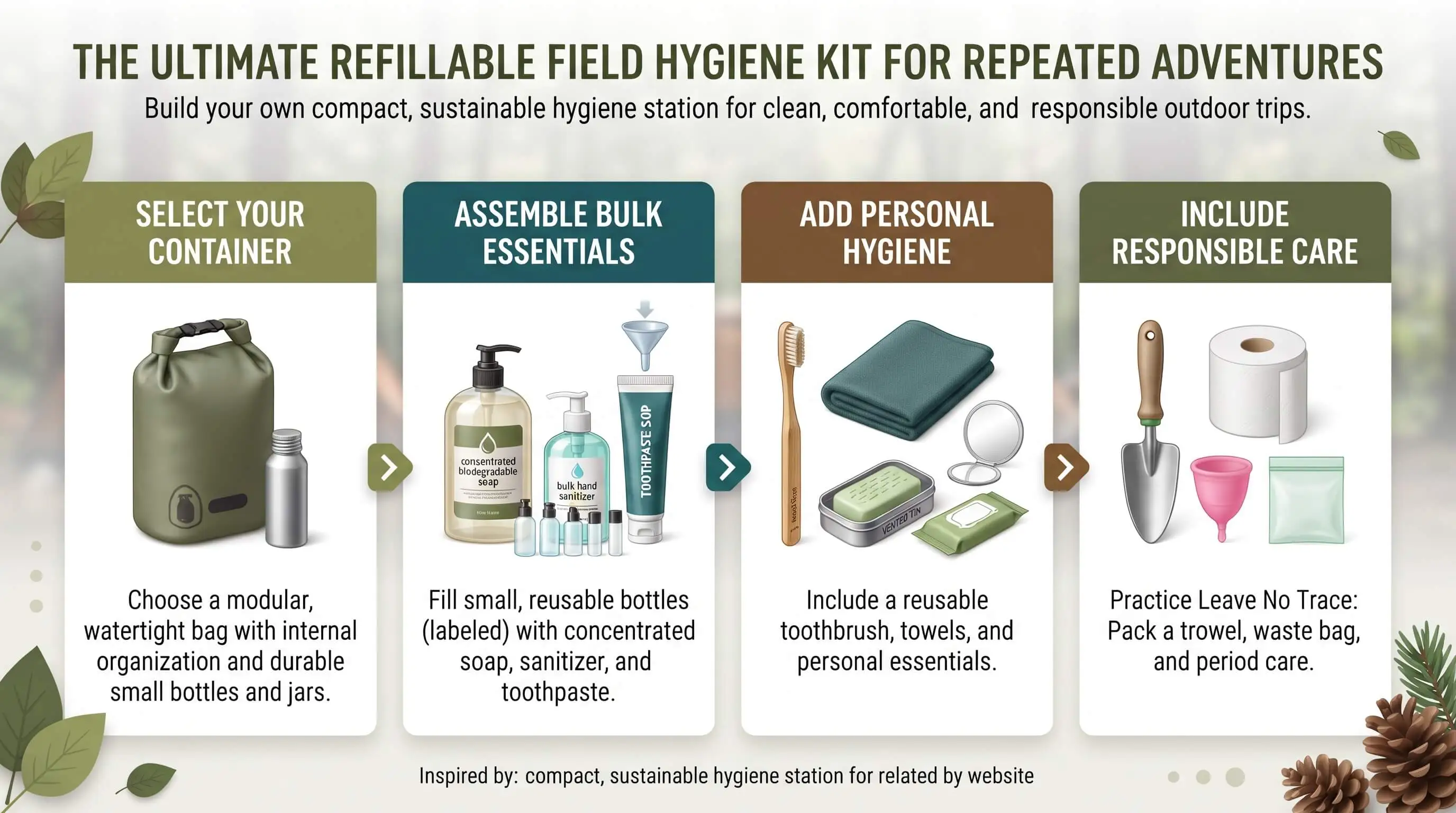
Field Hygiene Kit Checklist: What Goes Inside
Start with what you'll use every day. Add trip-specific extras after that.
Hand and body cleanser: a squeezable silicone bottle refilled from bulk rinse-free soap. Plan on 6–8 hand washes per person per day.
Toothpaste: a refillable tube or a tablet tin, topped up from a full-size tube or tablet jar. Two uses per day.
Dry shampoo: a shaker tin or the original pump, refilled from a full-size bottle. One use per day.
Deodorant: a small solid stick or refillable roll-on, refilled from a full-size stick. One use per day.
Wipes: a resealable pouch refilled from a bulk pack. Two to four wipes per day.
Quick-dry towel: kept in a mesh stuff sack, washed and rotated. One towel per trip.
Nail clippers and brush: kept in a zippered pouch and reused as needed.
Waste bags: a flat pouch refilled from a bulk roll. One or two bags per day.
Make Hand Cleaning Work Without Running Water
Hands are the backbone of any field hygiene kit, and they're the first habit to slip once water runs low. Sanitizer helps, but we treat it as the backup. The CDC says sanitizer may not work as well on visibly dirty or greasy hands, the kind you get from camping or fishing. So we build our kits around a rinse-free soap built for a field hygiene kit. It lifts dirt and oil without touching your drinking water, because drinking water comes first. Keep a small silicone bottle of it on your belt or in a hip pocket and top it up from a larger tube.
Choosing Containers That Survive Repeated Trips
Your containers decide whether the kit lasts for years or a single season.
Silicone squeeze bottles weigh almost nothing and empty all the way. Pick wide-mouth styles so you can scrub the inside.
Rigid plastic bottles with screw caps leak less in a crowded pack. They get hard to squeeze near the bottom, though.
Aluminum tins suit solids like tablets, bars, and powders.
Label everything with what's inside and the date you refilled it.
Leak-test at home. Fill each bottle, squeeze it hard, and leave it on its side overnight before you trust it in your pack.
Flying? Keep each liquid at 3.4 ounces (100 ml) or less, all in one quart-size bag, to stay within the TSA carry-on rule.
If a seal or cap starts to fail, replace that container. One leak can soak the rest of the kit.
How to Refill and Reset Your Kit Between Trips
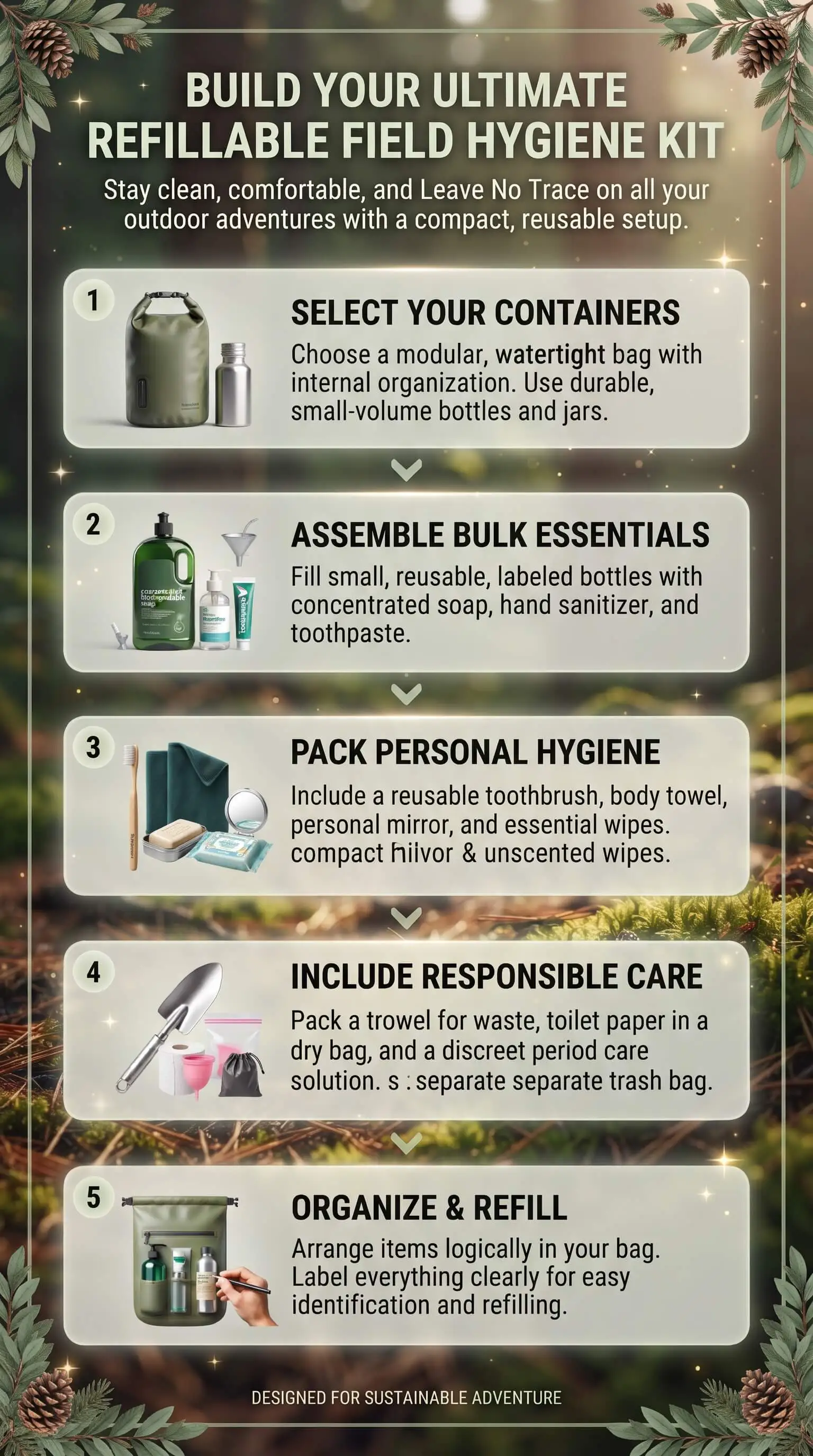
The reset turns a bag of toiletries into a system. We do it the same day we get home, before the kit goes back on the shelf.
Empty the kit and lay everything out.
Wash each container with warm water and a little soap, then rinse it well.
Stand everything upside down until it's dry inside. Trapped moisture causes most musty smells and residue.
Check caps, seals, and zippers. Replace anything cracked or sticky.
Refill each container from your bulk stock and leave a little headspace.
Label and date each container.
Write down what ran low and pack a bit more of it next time.
How Much to Pack: Simple Kit Math by Trip Length
Multiply washes per person per day by the number of days and the number of people, then add about 20% as a buffer. Say two people head out for four days and each washes their hands six times a day. That's 48 washes, or about 58 with the buffer. NOWATA rates one tube of its rinse-free soap for 80 to 100 uses, so a single tube covers the trip with room to spare.
Adjusting Your Field Hygiene Kit for Different Trips
One core kit can stretch to cover almost any outing.
Weekend Car Camping
Weight barely matters at a drive-in site. Carry bigger refills and stash a little bulk stock in the car so you can top up at camp instead of rationing.
Multi-Day Backpacking
Every ounce counts on the trail. Lean on solids, concentrates, and a rinse-free cleanser. Wash at least 200 feet from lakes and streams, and pack out everything you carried in, as Leave No Trace asks.
Field Training and Hunting Trips
Gear grease, dirt, and game coat your hands, often miles from water. Keep the hand cleanser in an outside pocket and plan on more washes per day than usual.
Emergency and Go-Bag Kits
Open your emergency kit every six to twelve months. Swap out anything expired, and refill whatever someone borrowed for a camping trip and never put back.
Common Mistakes That Shorten a Kit's Life
Putting bottles away while they're still damp
Overfilling containers so they burst in heat or at altitude
Pouring a new product into a container you haven't washed
Skipping the post-trip reset
Leaning on hand sanitizer alone when your hands are visibly dirty
"People worry about forgetting an item, but the mistake I see most is a kit nobody resets. We've packed for family camping trips and for longer stretches where we rationed water, and I now treat the drive home as the start of the next trip. That night, every bottle gets washed and dried upside down. Whatever runs low gets topped up first. Hand cleaning always gets the most room, because it's the habit that slips first when you're tired, cold, and short on water. We stopped trusting sanitizer alone the day we tried to wipe campfire soot and fish oil off our kids' hands with it. A rinse-free soap in a small refillable bottle fixed that, and it's stayed in our kit ever since."
Essential Resources
1. Understand Where Field Hygiene Comes From
The Wikipedia entry on field hygiene and sanitation shows how militaries cut non-combat illness by controlling personal hygiene, safe water, and waste. Read it for the backstory on why these habits matter outdoors.
2. Learn the Moments That Matter for Clean Hands
The CDC's About Handwashing page lists the key times to clean your hands, like before you eat and after you use the toilet, plus the full 20-second technique. We use it to set our daily wash count.
3. Know When Hand Sanitizer Falls Short
The CDC's hand sanitizer guidance says sanitizer needs at least 60% alcohol and works less well on visibly dirty or greasy hands. Give it a read before you make sanitizer your only plan.
4. Pack Out What You Clean Off
Leave No Trace's Dispose of Waste Properly principle asks you to wash at least 200 feet from water and use as little soap as you can. It also explains why even biodegradable soap affects lakes and streams.
5. Learn the Full Leave No Trace Framework
The Wikipedia overview of Leave No Trace sums up all seven principles. The first one, plan ahead and prepare, is exactly the job a refillable kit does for you.
6. Stock Your Emergency Kit the Right Way
Ready.gov's Build a Kit checklist covers hygiene and sanitation supplies and tells you to review and update your kit every year. Set your go-bag's rotation schedule from it.
7. Pack Liquids for Air Travel
The TSA's Liquids, Aerosols, and Gels Rule caps each container at 3.4 ounces (100 ml) and limits you to one quart-size bag. If your trip starts at an airport, size your refillable bottles to fit.
Supporting Statistics
1. Handwashing Education Cuts Diarrheal Illness by 23–40%
The CDC's handwashing facts and statistics report that handwashing education in communities cuts the number of people who get sick with diarrhea by 23–40%. A stomach bug can end a trip early. That's reason enough to make hand cleaning the anchor of your field hygiene kit.
2. Handwashing Education Reduces Colds and Other Respiratory Illness by 16–21%
The same CDC data finds that handwashing education lowers respiratory illnesses, colds included, by 16–21% in the general population. Shared camp kitchens and cramped tents make this one easy to underestimate.
3. The Average Person Uses 80–100 Gallons of Water a Day at Home
The USGS Water Science School estimates that each person uses about 80 to 100 gallons of water a day indoors at home. Out in the field you'll have a sliver of that, and most of it belongs in your bottle. Water-free cleaning earns its space in the kit for exactly that reason.
According to the CDC, handwashing education can reduce diarrheal illnesses by 23–40% and respiratory illnesses by 16–21%. The USGS also estimates that people use 80–100 gallons of water daily at home, making water conservation essential during outdoor activities. Whether camping, working in the field, or performing maintenance tasks involving proper roofing, carrying a field hygiene kit with water-free cleaning supplies helps maintain personal hygiene when water is limited.
Final Thoughts and Opinion
Our take: the field hygiene kit worth owning is the one that's packed, full, and dry in the morning when you need it, however few gadgets it holds. Getting there takes a few plain habits. Buy containers that last, reset the kit the day you get home, and do a little math before each trip.
We'll also push back, gently, on the idea that sanitizer can carry the load alone. It has its place. Outdoor dirt, grease, and soot need an actual cleanser, though. If you upgrade one thing in your kit, make it how you clean your hands when water is scarce. You can improvise almost everything else.
This article is general information, not medical advice. If you have a skin condition or specific health needs, check with your healthcare provider before you choose the best waterless hand soap or change your hygiene routine.
Frequently Asked Questions
What Should Be in a Field Hygiene Kit?
Pack a hand and body cleanser, a toothbrush and toothpaste, deodorant, a quick-dry towel, wipes, nail clippers, and waste bags. If you take repeat trips, put each item in a refillable container you can wash and top up from bulk stock.
How Do You Make a Hygiene Kit Refillable?
Swap disposable minis for durable silicone bottles, rigid screw-top bottles, or aluminum tins. Buy full-size products and pour off what each trip needs. After every outing, wash, dry, inspect, and refill each container.
How Often Should I Clean Refillable Travel Bottles?
Clean them after every trip. Wash each bottle in warm, soapy water, rinse it well, and let it dry upside down before you refill it. Moisture left inside causes most odors and residue.
How Much Soap Do I Need for a Week Outdoors?
Multiply your daily hand washes by the number of days and people, then add about 20%. One person washing six times a day for seven days needs about 50 washes. A tube rated for 80 to 100 uses covers that comfortably.
Is Hand Sanitizer Enough in the Field?
Not by itself. The CDC notes that sanitizer may work less well on visibly dirty or greasy hands, and outdoor hands usually are. Make a rinse-free soap your main hand cleaner and keep sanitizer as the backup.
Can I Bring a Refillable Field Hygiene Kit on a Plane?
Yes. In a carry-on, each liquid, gel, or cream has to be 3.4 ounces (100 ml) or less, and all of them must fit in one quart-size bag. Put larger containers in your checked luggage.
Keep Your Field Hygiene Kit Ready for the Next Trip
A kit that sits clean and full on the shelf is one less thing to chase down the night before you leave. Start with clean hands that don't cost you drinking water. Read NOWATA's guide to field hygiene without water and see how a rinse-free routine using soap for backpacking and hiking fits the kit you're building.